Every business professional eventually learns that markets move, strategies evolve and even the best-laid plans get tested by forces outside your control. But there is one asset that compounds quietly in the background regardless of what the market is doing: your reputation.
I’ve spent nearly four decades in the investment business, the last two-plus as Ancora’s CEO and chairman. Along the way, I’ve been part of dozens of deals; some that worked exactly as planned, others that required real course correction. What I’ve noticed is that the deals I’m most proud of, and the relationships that have lasted longest, were never about a single transaction. They were built on a track record of doing what I said I would do, even when it wasn’t convenient.
A reputation isn’t built in a single moment, and it can’t be manufactured with one good quarter or a clever pitch deck. It’s the sum of hundreds of smaller decisions — how you treat a counterparty when a deal falls apart, whether you return a call you’d rather avoid, how you talk about a competitor when they’re not in the room. In activist investing, this lesson is especially sharp. When Ancora takes a position in a company and pushes for change, we’re often dealing with boards and management teams who might not want us there. But even in an adversarial situation, how you conduct yourself matters. People have long memories, and the way you handle differing views today shapes whether the next call you make gets returned.
I’d also point out that reputation isn’t just personal; it attaches to your business, your board, your family name, sometimes even a whole city’s business community. Cleveland has built its reputation over generations through the way local companies conduct themselves. That collective credibility is worth protecting, and it’s why I think a strong regional business community continues to punch above its weight nationally.
This matters more, not less, for the younger generation entering the workforce today. Early in a career, it’s tempting to think reputation is something you’ll get around to building later, once you’ve made partner or landed the big title. In reality, the habits you establish in your 20s and 30s are the ones that follow you for the rest of your career. In a world where a text message can substitute for a real conversation and a LinkedIn post can substitute for a track record, the discipline of doing the unglamorous work of building trust in person, one relationship at a time, is a genuine competitive advantage for young professionals willing to do it. I’d encourage anyone early in their career not to wait for a title before they start developing their reputation, as it’s the one thing you’ll carry into every room for the next 40 years.
The hard part is that reputation is often asymmetric. It takes years to build but can be damaged in a single bad decision. That asymmetry should inform how you make choices, especially the ones nobody’s watching. I’ve found the simplest test is to ask myself whether I would be comfortable if this decision were made public. If contemplating that gives you pause, that’s usually your answer.
Markets will always have cycles and deals will sometimes disappoint, but a reputation for integrity, follow-through and fair dealing is one asset that appreciates no matter what the Federal Reserve does next. Protect it accordingly. ●
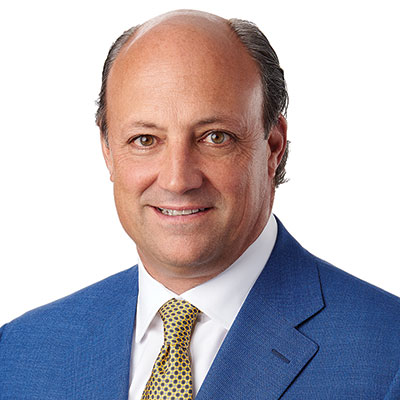
Fred DiSanto is Chairman and CEO of Ancora