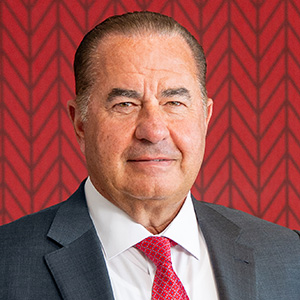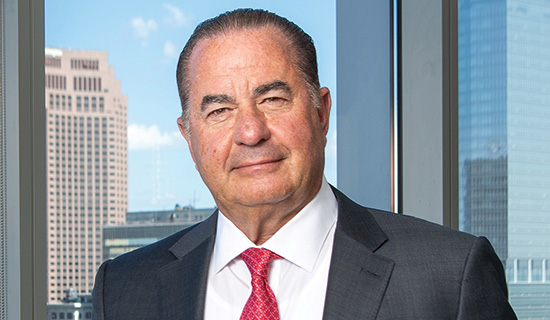
With only five CEOs at the helm over the past 133 years, Oswald Companies remains closely connected to the founding values that have contributed to its success through the generations. Founded in 1893 as a small Cleveland-based agency, Oswald has grown into a nationally recognized leader in risk management and insurance brokerage services — without losing sight of the service-oriented pillars that set it apart.
“It’s not easy,” says Chairman and CEO Robert Klonk, regarding the milestone of thriving over a century as a privately held company. “You have to stay true to your values, always do the right thing by the customer and never settle. Companies that settle tend to go out of business or get sold, but we fight every day to own our own company.”
Now, as one of the largest independent brokerages in Ohio, with a footprint quickly expanding across the country, Oswald Companies is looking ahead to the future, taking steps to preserve its legacy through strong partnerships and sustained growth.
When Klonk joined the company in 1995, Oswald only employed about 30 people. Today, the company has about 500 employee-owners across seven offices in Ohio, plus additional locations in Michigan and Pennsylvania. As the largest piece of Unison Risk Advisors, a holding company formed through a strategic merger in 2020, Oswald Companies is part of a much larger alliance of independent brokerages with approximately 1,600 employee-owners across 15 states with clients in all 50.
“Our employee-owners are the ones who are responsible for our success, because they’re the ones who show up every day and make it happen,” Klonk says. “I could plan the greatest strategy in the world and have a great vision for our company, but at the end of the day, you’ve got to execute, and I count on all 1,600 people to execute every day. That’s why we’re successful.”
Employee ownership
In 1985, Oswald Companies’ third generation of leadership, then-CEO Jim Pender, made the transformative decision to establish an employee stock ownership plan (ESOP). By transferring a portion of his holdings into a trust, Pender gave employees ownership stakes in the company in the form of stock shares. This pivotal move laid the foundation for a culture of shared success by empowering people to behave like owners, not just employees.
“An owner takes better care of a customer than an employee does,” Klonk says. “When you own something, you just care more about it.”
As consolidation sweeps across the insurance industry, with over 1,000 M&A deals recorded last year, Oswald’s privately held employee ownership model differentiates the firm from its competition.
“We’re very focused on taking care of our people and our customers,” Klonk says. “That employee ownership model rewards our employee-owners and benefits our customers because they have owners taking care of them. Our owners have the power to solve their problems; they don’t have to go up the chain to get approval.”
By giving employee-owners a vested interest in the company’s success, the ESOP gives Oswald’s associates an ownership mindset. This translates to a 24/7/365 commitment to taking care of customers, not just working from 8-to-5. The difference is tangible, Klonk says.
“We’ve had clients call our claims department at 10:30 p.m. on New Year’s Eve because their house was flooding, and we responded immediately,” he says. “I’ll never forget this because I got the call as well, and we had people out there within 20 minutes to get it triaged as quickly as we possibly could. We don’t just sell a policy. We make a commitment to our customers that we’re going to take care of them, so they have peace of mind knowing they’re protected.”
Service diversification
For most of its history, the company primarily offered property and casualty insurance. Then, in 1987, Oswald purchased a small life insurance brokerage headed up by Marc Byrnes, who became the company’s fourth CEO. Under Byrnes’ leadership, Oswald diversified its product mix to include life insurance, group benefits and retirement plans, hiring key leaders to run each business unit.
“That diversification helped us tremendously, because now we can take care of everything for a customer,” says Klonk, who Byrnes brought in to oversee Oswald’s benefits business. “Everybody works together collaboratively for the customer. They don’t need multiple brokers; we can do it all for them because we don’t have a siloed structure.”
While diversifying insurance product lines, Oswald Companies also expanded into new markets. The brokerage branched out from Cleveland to open offices in Akron, Canton, Columbus, Cincinnati, Toledo and Richfield, and even beyond Ohio with locations in Pittsburgh and Bloomfield Hills, Michigan.
Oswald Companies relied heavily on organic growth with few acquisitions throughout most of its history — until 2020, when the pandemic marked a major turning point.
“We realized that in order to remain independent and employee-owned, we had to do something different because we didn’t have enough shareholders to buy out retiring shareholders going forward,” Klonk says. “A lot of insurance brokerages get sold every year because they don’t have a perpetuation plan. So, we made a tough but very good decision to merge with a firm in Baltimore called RCM&D so we could create a platform for other like-minded firms that wanted to stay privately held and employee-owned.”
Klonk had known the leaders of RCM&D for decades, as both firms were involved in Assurex Global, a large global association of privately held insurance brokers, where he previously served as chairman of the board. The strategic merger created a holding company called Unison Risk Advisors, where Klonk also serves as chairman and CEO.
Unison made its first acquisition in 2023 and 36 acquisitions since then. Individual operating companies that join the Unison platform maintain their independence, their regional brand identities and their local service models, while tapping into the holding company’s full-service suite of solutions and specialties across its partner firms.
“Now we have more talent across the country who bring additional resources to Oswald, and we bring better resources to our customers,” Klonk says.
Culture of caring
When vetting potential acquisitions under the Oswald brand or the Unison umbrella, Klonk says the lines of insurance are less important than the team’s commitment to taking care of customers.
“It’s really more about the culture and the mindset than it is about the products they offer,” he says. “We can get the products anywhere. We need good, talented people who think and act like owners.”
To ensure that other companies share the same vision, Klonk and his team spend a lot of time “dating” potential acquisitions before closing a deal — sometimes up to a year or more. The due diligence process involves plenty of shared meals, golf games, visits to each other’s offices and other bonding opportunities that go deeper than financial analysis.
“It takes a long time for us to bring on a new partner because we take time in the diligence process with the goal of not just knowing the numbers, but knowing the people,” Klonk says. “They’re the ones who will become part of this.”
After bringing on a new acquisition, constant communication and collaboration contribute to a smooth integration and ongoing alignment. That’s when the culture starts to take over, so Klonk and other senior leaders don’t have to micromanage because the employee-owners hold each other accountable to values like a passion for excellence, integrity and resourcefulness.
“When they see that consistency of culture and values, they usually adapt to that,” he says. “Our culture is growth oriented, high energy and driven to win. We always push to improve and find better ways to serve our customers. We’ve lost some good people because they didn’t want to work that hard to win every day.”
Commitment to community
Although Klonk is reluctant to rank any one core value above the rest, Oswald’s commitment to community stands out as a defining tenet.
“We’ve been here 133 years, and we’ve been able to do that because Cleveland helped us grow, so we’ve got to pay that back,” he says. “We’re very proud of what we do in all the communities we serve because we don’t just write checks; we give back. It’s a lot of fun to see people working together to help the community.”
While Oswald does write plenty of checks to support local charities — including many of the 250-plus nonprofit companies it insures — the firm also encourages people to donate their time and skills, as well. In addition to structured days of caring that rally employee-owners to volunteer collectively, the company also grants additional paid days off for people to serve organizations of their choice. Members of the leadership team are required to serve on boards, and many other associates have also joined nonprofits as a way of giving back and getting involved.
For example, Klonk exemplifies this core value by serving as chairman of the Greater Cleveland Sports Commission and serving on the board of the Greater Cleveland Partnership and the Cleveland Leadership Center, among various other leadership positions and appointments throughout his career.
Led by president Jessica Jung, Oswald Companies solidified its investment in Cleveland by relocating its corporate headquarters from Superior Avenue to the East Bank of the Flats in 2024, moving into the former Ernst & Young Tower now known as Oswald Tower. As the anchor tenant of the building, Oswald occupies approximately 100,000 square feet of the skyscraper with expansive views overlooking the Port Authority, Huntington Bank Field and the Shoreway.
Jung, who has served as Oswald’s president since 2022, cemented Oswald’s collaborative vision and community focus by establishing the Community Conference Center and 1893 Lounge on the first floor of Oswald Tower. This interactive gathering space — open to Oswald employee-owners, clients and local nonprofits free of charge — delivers on the company’s commitment to building partnerships and connections that extend beyond traditional insurance services. The center has hosted thousands of guests since its inception.
“It’s nice to see a little bit of vibrance back in the Flats,” Klonk says. “We’ll do everything we can to help the Flats continue to grow. While we’re growing in places outside of Ohio, this is our home and we’ll always take care of our home.”
Future growth
Over its 133-year history, Oswald Companies has served generations of client organizations that continue to depend on the firm’s unwavering service.
“We’ve earned the loyalty, trust and respect of our clients, and we work hard to keep it,” Klonk says. “It all comes down to having the right people and the right culture focused on taking care of our customers. We’re trying to maintain that culture for another 133 years; that’s our legacy.”
Looking ahead, Klonk and his leadership team are eyeing growth opportunities in new geographies across the country — with recent expansion in Florida, the southeast and the northeast, as well as continued growth across Ohio.
“What’s next is to just do what we do, but do it better,” he says. “We have this mentality of finding a better way every day. How can we create better processes for our people and better outcomes for our clients?”
For example, he says Oswald continues to explore new tools and technologies, like AI, to help its employee-owners serve customers more efficiently and effectively.
“We don’t view AI as replacing people, but making them better at their job,” he says. “We’ll embrace new technologies, but we will never, ever lose sight that this is a relationship business. It always has been and it always will be.”
For that reason, Klonk says he’s bullish on the future for Oswald Companies.
“We have this expression: always proud, never satisfied,” he says. “We know our people are very good and they continue to get better. We firmly believe in the model we’ve invested in and we’re very excited about what the future holds. If we were just checking boxes, we wouldn’t still be here 133 years later.” ●